DancePro guide
Mirrored vs. Non-Mirrored Dance Videos
Mirroring a dance video changes left and right, not the choreography itself. Understanding that difference prevents hours of practicing the correct shape on the wrong side—and helps you know when a flipped view is useful and when to turn it off.
Published September 5, 2026
Quick Answer
A mirrored dance video is horizontally flipped so the dancer's right side appears on your right side. This lets you copy the screen as though it were a mirror. A non-mirrored video preserves the original audience view, so a dancer facing you appears to move on the opposite side of the screen. Use mirrored playback for intuitive follow-along learning, and check the original orientation when stage direction, formations, text, or exact right-versus-left choreography matters.
What Does Mirrored Mean in Dance?
Mirrored means the image has been flipped horizontally. Imagine that the dancer is your reflection: when the image moves toward the right side of the screen, you move toward your right. Clothing logos and any words in the room will appear backward, which is often the easiest clue that a video is mirrored.
Non-mirrored video shows the camera's original view. When a dancer faces the camera and raises their right hand, that hand appears on the left side of your screen. To perform the same true right-side movement, you must translate what you see rather than copy the picture literally.
Mirrored and Original Views Compared
Mirrored view
Best for quick visual imitation. Your visible right matches the right side of the screen, reducing left-right translation while you learn.
Original view
Best for preserving the source exactly, studying how the dance looks to an audience, reading formations, and checking written signs or asymmetric details.
Back-view tutorial
A teacher facing the same direction as you can also reduce translation without flipping the image, although fewer videos use this angle.
How to Tell Whether a Dance Video Is Mirrored
- 1. Look for text: Reversed shirt logos, studio signs, or captions inside the recorded scene indicate a horizontal flip. Interface captions added later may remain readable.
- 2. Read the title and description: Tutorial creators often label videos “mirrored,” “mirror mode,” or “follow along.” Do not assume that every dance-practice upload is flipped.
- 3. Compare a known detail: Check an asymmetric costume, a recognizable formation, or the official performance. This is more reliable than guessing which hand feels natural.
- 4. Test one directional count: Choose a clear right- or left-side action and compare it with the choreographer's instruction, if one is available.
When Should You Use a Mirrored Dance Video?
Mirroring is especially helpful when you are new to copying a person who faces you, when the phrase changes direction quickly, or when your immediate goal is to follow along and establish the broad pathway. It is common in K-pop and social-video tutorials for exactly this reason.
Use the original orientation when you need to match a named right or left side, join a group formation, reproduce an audition combination exactly, or understand how the finished choreography reads from the audience. If you are unsure, ask the teacher or choreographer which orientation they expect.
Do Not Let the Mirror Become the Memory
Visual feedback can help learning, but research on mirrors in dance is not a simple verdict that more mirror use is always better. Studies have found different effects depending on when the mirror is present, the task, and the dancers. One useful practical response is to alternate conditions instead of choosing one forever.
Learn the direction with the view that reduces confusion. Then perform the phrase without watching the image, face another wall, or record a take for later review. The goal is to carry the choreography in your body and musical awareness, not to remain dependent on a reflection.
Three-view check
Practice once with the mirrored reference, once from memory without visual feedback, and once while reviewing the recorded audience view. Each pass answers a different question.
Mirror Any Imported Reference in DancePro
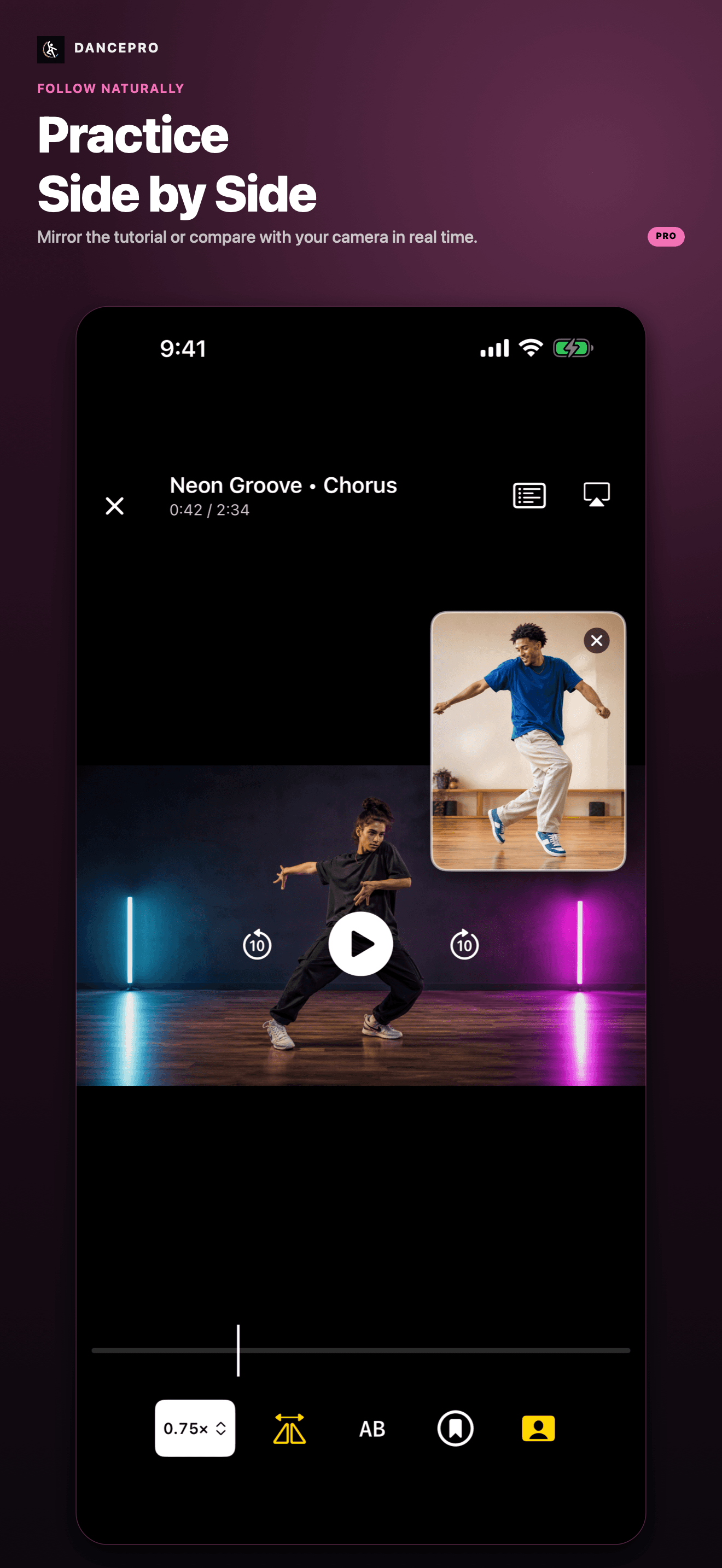
DancePro can flip a dance video you have saved and imported, so you do not need to search for a separately uploaded mirrored copy. The same reference can stay linked to your speed, loop, bookmark, and camera-practice workflow.
Keep the original creator's orientation in mind, particularly for group choreography. Mirroring is a learning aid; it does not change which direction the choreographer ultimately calls right or left.
Follow the movement, not the left-right puzzle.
Flip any imported dance reference in DancePro, slow the difficult counts, and switch to camera practice when you are ready to test the movement yourself.
DownloadFrequently Asked Questions
If a dance video is mirrored, do I copy it exactly?
Usually, yes: a mirrored tutorial is designed so you can copy the visible side directly. Confirm the creator's label and check a known directional detail before memorizing the routine.
Does mirrored mean the dancer is doing the dance backward?
No. The choreography and timing are unchanged. Only the horizontal presentation is flipped, so left and right exchange places on screen.
How can I tell left from right in a non-mirrored video?
If the dancer faces you, their right generally appears on your left. Use an asymmetric visual clue or explicit instruction to confirm. A back-view demonstration is easier because the dancer faces the same direction as you.
Should I always practice dance with a mirror?
No. Mirrors provide useful visual information, but practicing without them tests memory, balance, body awareness, and performance independence. Alternate visual feedback with no-mirror attempts according to the skill you are training.
Can I mirror a dance video on iPhone?
Yes. You can flip a video with editing or practice software. DancePro provides a mirror control for imported dance references, allowing you to switch orientation without creating a separate edited copy.
Keep Learning
Sources and Further Reading
These references informed the guide. Dance training is individual; use qualified instruction for technique, injury concerns, and movements that are new or unsafe in your space.